Roads
Grossglockner High Alpine Road — A Driving Guide
The 48-km road over Austria's highest peak. What it costs, when to drive, where to stop, and why we put it on Day 4 of the Porsche Europe tour.
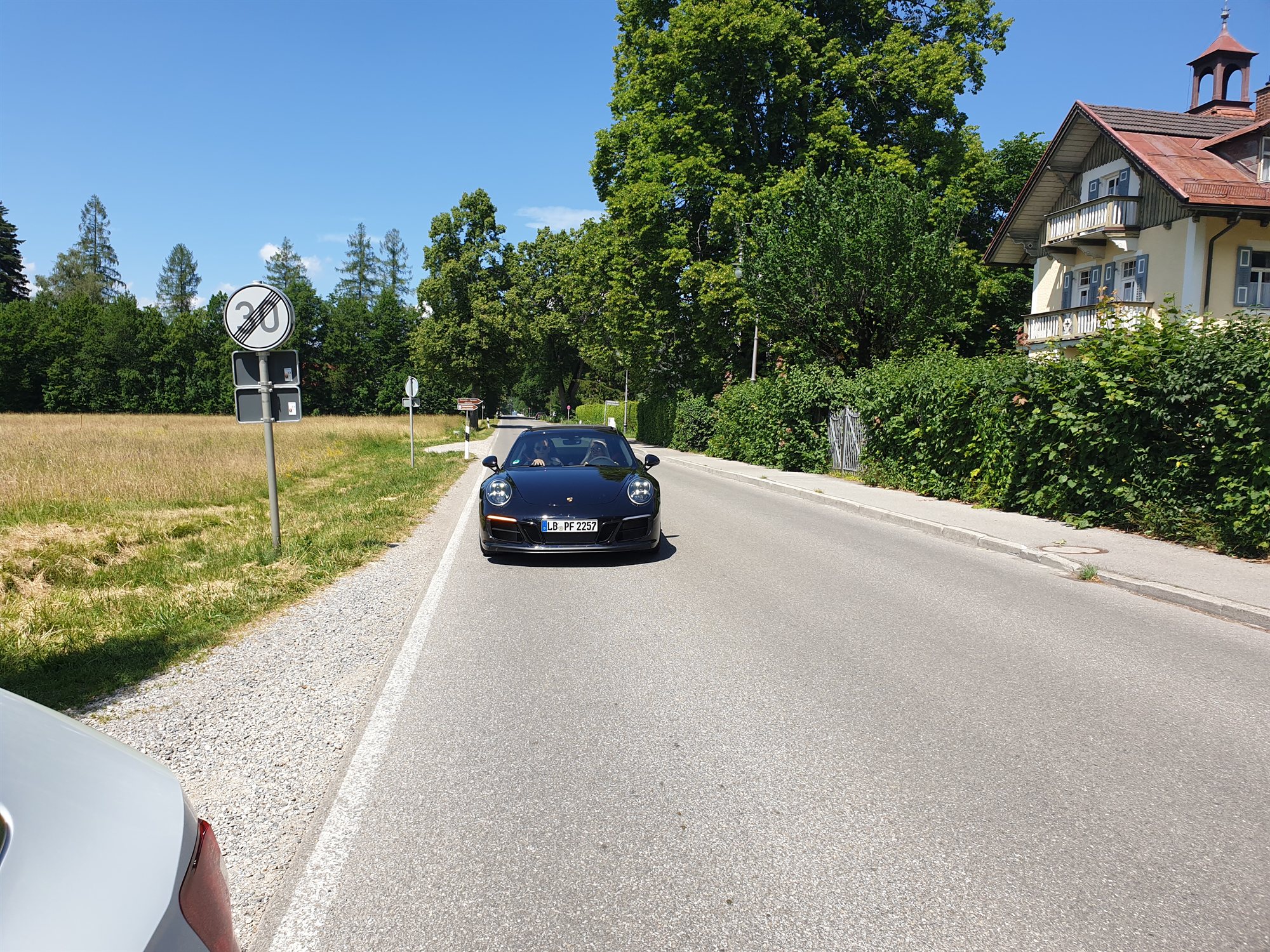
The Grossglockner High Alpine Road — Großglockner Hochalpenstraße — is the most famous mountain road in Austria, and one of the three or four greatest driving roads in Europe. We climb it on Day 4 of the Porsche Europe tour, between Solden and Salzburg. This is the guide we wish we’d had the first time we drove it.
TL;DR
- Where: Austrian Alps, between Bruck (north entrance) and Heiligenblut (south entrance).
- Length: 48 km, 36 hairpins, max altitude 2,571m at Hochtor pass.
- Toll: €42 per car per day (2026).
- Open: Early May to early November.
- Time: 90 minutes non-stop, 3+ hours with the glacier-viewing detour.
- Cars best suited: Sports cars and GTs. Avoid in heavy RVs or wide trailers.
Why this road matters
The Grossglockner was built in the 1930s as a depression-era public-works project. It was finished in 1935. Engineering-wise, it’s a triumph: every gradient is consistent, every switchback is the same radius, the surface is renewed yearly, and the road tops out at 2,571m at the Hochtor pass — high enough that you cross a real climate boundary on the way up.
For drivers, what makes it special isn’t just the altitude. It’s the rhythm: 36 hairpins in 48km is enough to feel a car’s chassis without ever becoming repetitive. Every few kilometres the landscape shifts — alpine meadows give way to bare rock, then to glacier views, then back down through forest on the southern side. You drive it once and you understand why people return.
The route — south to north (the way we drive it)
We enter from Heiligenblut on the southern side and exit at Bruck. This is the better direction for a sports car: the climb up is in shadow until late morning, and the descent to Bruck has fewer obstacles for the second half of the day.
The southern climb (Heiligenblut → Hochtor)
The first kilometres are gentle — a warmup through alpine forest. Then the road tightens. From the 1,500m mark the gradient is locked in at 9-11% and the hairpins start counting down. The surface here is excellent. The corners are wide enough that two cars can pass without ceremony. By the 2,000m mark you’re above the treeline and the landscape is bare rock and snow patches.
The Edelweißspitze branch
About two-thirds of the way up there’s a side road — 1.7km of cobbled hairpins climbing to the Edelweißspitze viewpoint at 2,571m. The cobbles slow you down but the 360° view at the top is the best on the entire road. We do it. Five minutes there, photographs, back to the main road.
Kaiser-Franz-Josefs-Höhe (the glacier viewpoint)
The other branch — and the more famous one — is the 8km spur road from Guttal east to the Kaiser-Franz-Josefs-Höhe. This is the platform that looks directly across at the Pasterze glacier and Grossglockner peak (3,798m). On a clear day it is one of the great views in Europe. The road in and out is the same — you drive it twice — so allow 90 minutes for the detour.
Hochtor pass
The summit is the Hochtor tunnel at 2,504m. Old, narrow, a single lane each way. The tunnel marks the watershed between the Salzach valley (north) and the Möll valley (south). Past the tunnel the road opens into wide hairpins on the northern descent.
The northern descent (Hochtor → Bruck)
Faster, more flowing. The corners are wider and the gradient is more forgiving. The view ahead is the long northern valley with Kaprun and the Hohe Tauern range. This is where you can really enjoy the GTS chassis — the descent rewards momentum over heroics.
What to know before you go
Pay the toll at the gate. Either entrance booth takes credit cards. Day pass = €42 per passenger car in 2026. Keep the receipt — you’ll need it if you exit and re-enter the same day.
The road closes at night. Opening hours are roughly 5am to 9:30pm in midsummer, shorter in shoulder season. If you’re not through by closing the gates lock and you’re spending the night where you are.
Weather changes fast. It can be 28°C at Bruck and snowing at the Edelweißspitze the same afternoon. We’ve had a sunny morning turn to fog and sleet by lunch. Bring a layer.
Cyclists, motorcyclists, RVs. All allowed and all common. Expect to be patient on the climb. The road is wide enough to pass safely but pick your moment.
Speed limits. 70 km/h on the main road, 30 km/h in the switchbacks. The police presence is low but not zero. Drive within limits — the road rewards smoothness over speed anyway.
What we do differently
Most operators who include the Grossglockner do it as a quick crossing — north to south, lunch at the bottom, gone. We treat it as the highlight of Day 4 and give it the time it deserves. We climb from the south in the morning, do the Edelweißspitze branch, lunch at the Kaiser-Franz-Josefs-Höhe with the glacier in view, and descend to Bruck in the afternoon.
Then — and this is the part most operators don’t do — we drive 10km east to the Zell am See heliport and take a private helicopter flight over the Alps. By the time we land at Laschenskyhof for dinner, the group has done the road, the glacier view, and the air-view of the same mountains in a single afternoon. It’s the day guests describe to their friends a month later.
When to drive
Best months: Late June through mid-September. The road is fully open, the weather is most stable, and the snow patches at the top look spectacular without being a hazard.
Shoulder magic: Early June or late September can be unforgettable — fewer cars, snow walls at the top, golden light. We’ve had perfect weather in early October too, but the road can close on 12-hour notice if a storm comes in.
Avoid: July weekends. The road is the most popular drive in Austria and the lay-bys at the famous viewpoints can be three-deep with motorcycles. Midweek is always better.
Where this sits in the Porsche Europe tour
The Grossglockner is Day 4 of our 5-day Porsche Europe tour. The full route: Munich → Garmisch-Partenkirchen → Interalpen Tirol (Day 1) → Timmelsjoch Pass into Italy → Quellenhof in South Tyrol (Day 2) → back into Austria → The Secret Solden (Day 3) → Grossglockner + helicopter → Laschenskyhof (Day 4) → Herrenchiemsee Castle → Munich → Roomers (Day 5).
If you’re planning your own trip and want a single road to build a long-weekend around, this is it. If you want the full Alpine arc — Timmelsjoch, Grossglockner, and the helicopter on the same week — that’s what the tour is for.
— Niro Sharon, Founder, Pure Adrenalin
Frequently asked questions
- How much does the Grossglockner road cost?
- The toll for a passenger car is €42 per day in 2026 (single entry, exit by 10pm). Motorcycles pay €32. There's a multi-day pass for €62 valid up to three weeks. The toll is paid at the gate — no advance booking required.
- When is the Grossglockner road open?
- Annually from early May to early November, weather permitting. Opening hours: 5am-9:30pm in midsummer, shorter shoulders. The road closes at night. In June and September the road is open but you may meet snow at the summit.
- How long does it take to drive?
- The road is 48 km end to end, with 36 hairpins and a high point of 2,571m at Hochtor. A non-stop crossing is about 90 minutes. With the Kaiser-Franz-Josefs-Höhe viewing platform stop (the one with the glacier view), allow 3 hours minimum. On our tour we allow a full morning.
- Is the Grossglockner suitable for a sports car?
- It's the best sports-car road in the Eastern Alps. The surface is excellent, the corners are well-cambered, and the gradient is consistent (8-12%). The Porsche 911 GTS — Cabriolet or Coupé — is in its element here. Less ideal for hyper-low ground clearance or anything wider than ~1.95m on the tighter switchbacks.