Drives
Porsche Driving Tour Europe — A 2026 Buyer's Guide
Choosing a Porsche driving tour in Europe is a €25-50k decision. Here's what to compare — itinerary, hotels, cars, group size, who actually leads it — before you reserve.
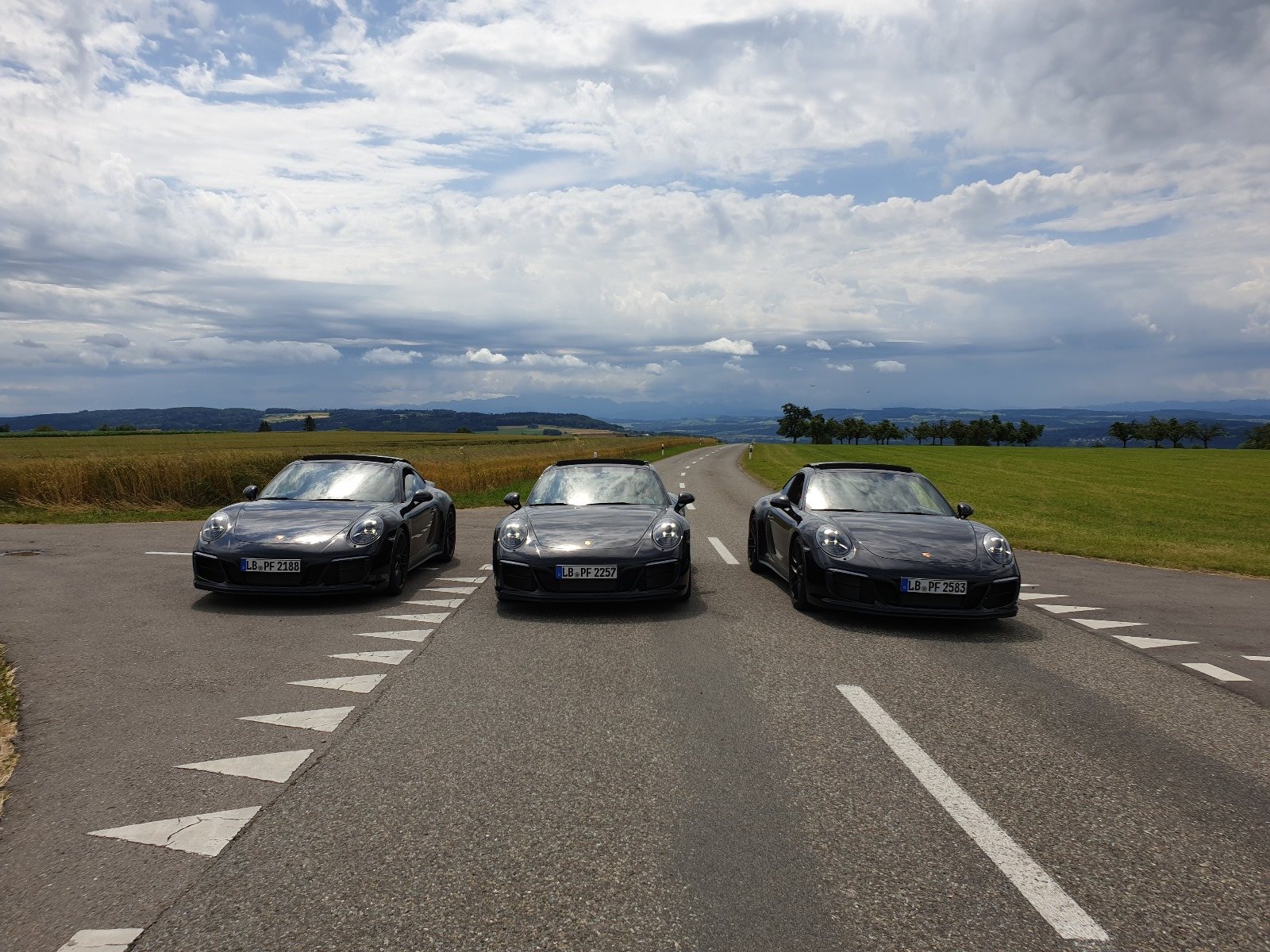
A seven-day Porsche driving tour in Europe at the five-star tier is a €25,000–€50,000 decision per person. It is also, almost without exception, the most memorable thing the people who take one do all year. After 20 years of running these trips, I want to tell you what to look at before you wire the deposit — including what to push your operator on, and what’s nearly impossible to get right unless you’ve been doing it for a decade.
TL;DR
- Itinerary matters more than miles. A great tour has 90–180 km of driving on most days. More than that is masochism. Less than that, you’re paying for hotels, not for driving.
- The hotel sequence is the product. A tour with one great hotel and four merely-good ones falls apart on day three. The hotel-night-quality variance is the cleanest signal of how seriously the operator works.
- The car you’ll drive matters less than people think. A 718 Cayman GTS and a 911 GT3 RS will both be wonderful on the Stelvio. The cars are 80% of the photos and 20% of the experience. The roads and the routine are the rest.
- Group size is everything for the social experience. 8–12 guests is the established sweet spot. Less than 6 and the table feels thin. More than 14 and you stop knowing names.
- Ask who leads it personally. The named principal of the company should be in the lead car on most days. If you book a tour and a different person shows up at the airport, ask yourself why before you arrive.
What you’re actually buying
A Porsche tour in Europe is not transport. The car is the centrepiece, but the trip is hotel, driver, table, road, hotel, driver, table, road — repeated over seven days. The quality of each of those nodes is what you’re paying for.
The mistake most first-time buyers make is to focus on the car list. The car list is usually the easiest thing to get right — every operator in Europe can secure a 911. The hard parts are:
- The hotel sequence (and the relationships that get you the rooms you want, in season, two years in advance).
- The restaurant sequence (the Michelin tables are easy to book in November; impossible in July when you actually want them).
- The road sequence (knowing which pass to drive at which hour of which day to avoid the cyclist sportive that closes it).
- The driver mix (who’s in the group with you matters more for the experience than any other variable).
A great operator solves all four. A mediocre operator solves one or two and improvises the rest.
The seven things to ask before reserving
-
“Walk me through the hotel sequence — and tell me which are five-star and which are not.” Be specific. “Five-star” is doing a lot of work in tour marketing. Bayerischer Hof, Alpenhof, Villa d’Este, Splendido — these are five-star. “Boutique” sometimes means three-star with marketing copy. Ask for the actual list.
-
“What’s the group size and the car-to-guest ratio?” Two people per car is the standard. One person per car costs more but transforms the experience for solo or business travellers. Ask if single supplements are available.
-
“Who personally leads the tour?” The named founder, or a contract driver? This is the single biggest quality differential in the industry, and almost no one volunteers it.
-
“What happens if a car has a mechanical issue?” Reasonable answer: spare car within 4 hours, full refund of that day if delayed. Unreasonable: “We swap with another guest.”
-
“How does the daily rhythm work?” Drive in the morning, lunch on the road, arrive at hotel mid-afternoon, time before dinner. That’s the right shape. If a tour is driving until 7pm every day, you’ll be exhausted by day four.
-
“What’s the cancellation policy?” Reputable operators carry deposit insurance and offer credit-toward-future-tour at minimum. If they push you to wire 100% up front non-refundable, that’s a small operator with cashflow problems, not a luxury operator.
-
“Can you put me in touch with two recent guests?” Any operator that won’t do this within 48 hours is hiding something. Past guests will tell you the truth — including the things the operator wouldn’t.
The cars — what to actually drive
Five years ago this was a longer answer. Today it’s simple:
| If you want… | Pick |
|---|---|
| The best chassis for Alpine roads | 718 Cayman GTS 4.0 or Cayman GT4 |
| The default “great Porsche tour” experience | 911 Carrera S or Carrera 4 GTS |
| To go fast on Autobahn between mountains | 911 Turbo S or Taycan Turbo S |
| To say you drove the iconic one | 911 GT3 (manual if you can get one) |
| To be different | 911 R, 918 Spyder (if the operator has one), or a 964 RS for the vintage tour |
What to avoid for first-time tour: heavy and wide cars (Panamera, Cayenne). They’re great roads cars but they fight you on tight passes.
The route question — Germany / Austria / Italy is the answer
Three classic European Porsche routes exist:
-
Germany → Austria → Italy (Munich → Tyrol → Dolomites → Lake Como). The default. The hotel and restaurant density is unmatched. The road quality is excellent. This is what we run as our flagship.
-
France → Italy (the Côte d’Azur loop into Liguria and Tuscany). Better cuisine and coastal photography, worse driving roads. Best if your group is half-driver, half-companion.
-
Switzerland alone (Lucerne → Furka → Grimsel → Susten → St Moritz). The most dense road quality per kilometre. The hospitality is excellent but uniform — Switzerland doesn’t have the variance that Italy does. Best for serious drivers, less ideal for groups with non-driving partners.
For first-time tour-takers, route 1 is correct 80% of the time. Routes 2 and 3 are better for returning guests who’ve done route 1.
What “five-star” actually means in this category
Five-star is the most abused word in luxury travel marketing. In our context it means:
- Hotels that hold the official five-star rating in their country and are in the top 5–10 properties of that country (so: Bayerischer Hof in Munich, not the cheapest five-star in Munich).
- Restaurants that have at least one Michelin star, with most dinners at properties with two or three.
- Cars maintained by Porsche-authorised workshops, not enthusiast garages.
- Drivers who lead in person, not by phone.
- Recovery if anything goes wrong — backup cars, alternative hotels, alternative chefs — within hours, not days.
If any of those is missing from an operator’s answer, the price you’re paying isn’t actually a five-star price. You’re paying for the brochure.
Booking timing
The serious answer: 9–18 months in advance for July–September, 6–12 months for April–June, and 4–8 months for September–October. The reason: the hotels and restaurants are the bottleneck, not the cars. The cars can be sourced 8 weeks out. The Bayerischer Hof presidential suite cannot.
If you’re inside 3 months and want a tour during peak season — book a route that includes one mid-summer week of slack (a quieter region, an off-peak hotel), or accept that you’re getting the off-cuts of someone else’s cancellation.
How we think about all this at Pure Adrenalin
We run our flagship — Germany–Austria–Italy in 7 days, five-star throughout — because we’ve spent twenty years getting each of the seven nodes right. Our hotel relationships are why we can put 12 people at Bayerischer Hof in July; our driving experience is why we know the Stelvio is empty at 6am on the second Tuesday of September.
If you’ve read this far you already know more about how to pick a tour than 95% of buyers. The operator you choose should be able to walk you through every one of the seven questions without hesitating. If they hesitate, choose a different operator.
If you’d like to know which questions we’d ask other operators (and what we’d be listening for), email me directly. I’ll send you our internal scorecard — the one we use when we audit our own product.
Frequently asked questions
- How much does a Porsche driving tour in Europe cost?
- A seven-day, all-inclusive Porsche driving tour in Europe at the five-star tier ranges €18,000–€32,000 per person (double occupancy), excluding international flights. The variance is driven mostly by the car (a Cayman GTS sits at the lower end, a 911 GT3 RS at the upper end), hotel tier (four-star vs five-star), and group size (smaller groups carry higher per-person cost).
- Which Porsche is best for a European driving tour?
- For Alpine routes — Stelvio, Grossglockner, Sella, Furka — a 718 Cayman GTS or 911 Carrera S is the sweet spot. The corners are too tight to use a 911 Turbo S's full range, and the chassis-first character of a Cayman or base 911 rewards the driver more. For longer, faster motorway sections (Germany Autobahn, French A8), a 911 Turbo S or Taycan Turbo S earns its keep.
- How many days should a Porsche tour in Europe be?
- Seven days is the established sweet spot for Europe: enough to cover Germany, Austria and Italy with two-night stays at the best hotels, but short enough to avoid driving fatigue. Five-day tours feel rushed (everyone wishes they'd had two more days). Ten-day tours often degrade in quality on days 7–10.
- What's included in a fully curated Porsche driving tour?
- A reputable curated tour includes: the car (fully insured, fuelled), every hotel night, every dinner, breakfast and most lunches, fuel and tolls, transfers from arrival airport to the start point, a lead/sweep guide setup (1 vehicle in front, 1 behind), and on-call mechanical support. Flights, travel insurance, alcohol beyond what's included at dinners, and personal spending are typically excluded.
- Can I drive my own Porsche on these tours?
- Most curated operators allow you to bring your own car, with a corresponding price reduction for the car portion (€3,000–€8,000 depending on duration). You'll still pay full price for the hospitality. Bringing your own car works best for European residents — international shipping for one week rarely makes financial sense.